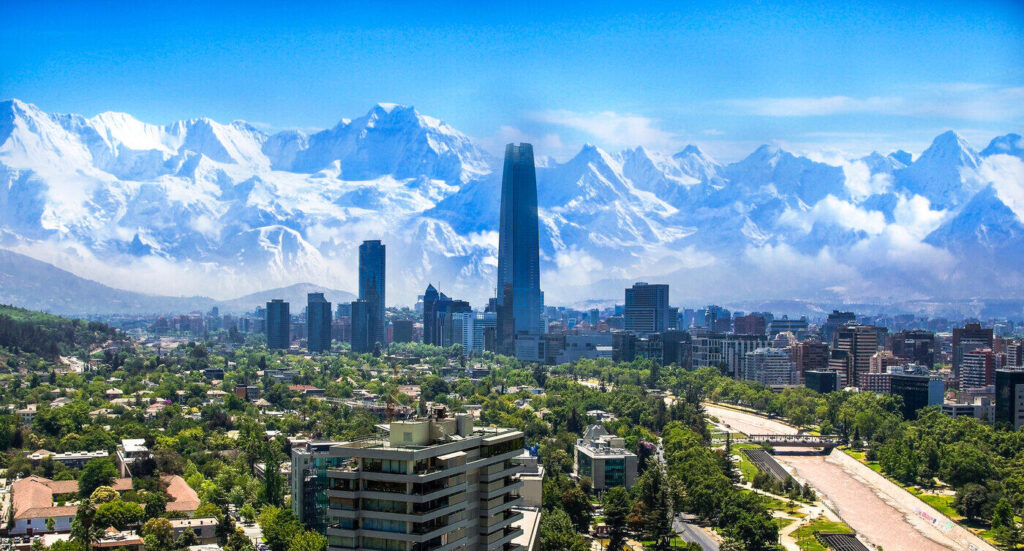
For years, digital nomads flocking to Latin America defaulted to the usual suspects — Medellín, Mexico City, Buenos Aires. Chile, despite being one of the region’s most developed and stable countries, was consistently overlooked. That is rapidly changing. With the fastest fixed broadband internet in Latin America, a time zone closely aligned with the US East Coast, a growing ecosystem of coworking spaces, and a quality of life that rivals European cities at a fraction of the price, Chile has quietly become one of the most compelling long-term bases for remote workers in the entire Southern Hemisphere. Here is everything you need to know about living and working in Chile as a digital nomad.
Why Chile Works for Remote Workers
Chile’s appeal as a digital nomad destination rests on a combination of factors that most Latin American competitors cannot match simultaneously.
Internet quality is the headline advantage. Chile ranks consistently among the top 10 countries globally for fixed broadband speeds — a remarkable achievement for a South American nation. Local provider MundoPacifico recorded median download speeds of around 477 Mbps in Ookla’s connectivity benchmarking, and even outside Santiago, the Valparaíso region averages 352 Mbps fixed broadband speeds — far exceeding what most remote work demands. Chile’s broadband speed surpasses countries like China and the United States, making it the fourth fastest country in the world for connectivity. For any professional whose livelihood depends on a reliable, fast connection, this is transformative.
Time zone alignment is the second major asset. Chile operates on UTC-3 to UTC-4 (depending on daylight saving time), placing it just 1–2 hours ahead of the US East Coast. This means video calls with American clients fall during normal working hours, sprint standups don’t require 6 AM wake-ups, and the collaborative friction of a radically different time zone simply disappears.
Political and economic stability round out the picture. Chile has the highest Human Development Index in South America, a functioning rule of law, low corruption by regional standards, and a healthcare system ranked among the continent’s best. For nomads committing to a 3–6 month stay, these foundations matter enormously.
Cost of Living in Chile as a Digital Nomad
Chile is not the cheapest country in Latin America — that distinction belongs to Bolivia, Colombia, and parts of Central America. But it is exceptional value for the quality of life it delivers, and costs vary meaningfully depending on the city you choose.
The realistic monthly budget for a comfortable digital nomad life in Chile ranges from $800 to $2,000 USD per month, with the following breakdown:
| Expense | Budget Range (USD/month) |
|---|---|
| Accommodation (furnished apartment) | $300 – $800 |
| Food (groceries + eating out) | $200 – $400 |
| Transport | $50 – $100 |
| Coworking space | $150 – $400 |
| Leisure & entertainment | $100 – $200 |
| Total | $800 – $2,000 |
High-speed home broadband — 60 Mbps or higher, unlimited data — costs just CLP 21,196 (approximately USD $22) per month. A single public transport ticket in Santiago runs CLP 750 (USD $0.80), and a monthly transit pass is approximately USD $41. Mobile data plans with 10GB or more of monthly data cost around USD $12. A prepaid SIM costs between USD $2 and $5 to set up.
For comparison, Santiago’s average monthly nomad budget sits around $1,292, while more affordable cities like Viña del Mar and La Serena come in closer to $1,056 per month.
The Best Cities for Digital Nomads in Chile
Santiago — The Established Hub
Santiago is Chile’s undisputed digital nomad capital — and according to an increasing number of remote workers, one of the most underrated nomad cities in all of Latin America. The city of seven million offers everything a remote professional needs: extensive coworking infrastructure, excellent healthcare, a world-class restaurant and cultural scene, and the practical backbone of a genuinely developed metropolis.
The best neighborhoods for digital nomads are Providencia — the primary nomad hub, with tree-lined streets, walkable blocks, a high concentration of coworking spaces, and excellent metro access at around $750/month for a furnished apartment — and Lastarria/Bellas Artes, Santiago’s most bohemian and culturally rich neighborhood, ideal for creatives and those who want cafe culture alongside professional infrastructure.
Santiago’s average internet speed runs around 59 Mbps on standard residential connections — already excellent for remote work — with fiber options reaching far higher. The city is considered one of the safer capitals in Latin America, though standard urban precautions apply: avoid flashing valuables, stay aware in crowded areas, and use Uber or Cabify rather than unlicensed taxis at night.
Monthly budget: $1,300 – $2,500 USD for a comfortable lifestyle
Best for: Long-term stays, professionals, those needing full urban infrastructure
Valparaíso — The Creative Alternative
For digital nomads who find Santiago too corporate and expensive, Valparaíso offers a compelling counterpoint. This UNESCO World Heritage port city, 90 minutes from Santiago, is home to one of South America’s most vibrant street art scenes, a strong creative and university community, and a lifestyle that trades skyscrapers for colorful hillside houses and Pacific Ocean views.
Valparaíso’s monthly nomad cost averages around $1,175–$1,184 USD, making it modestly more affordable than Santiago. Internet connectivity in the Valparaíso region averages 352 Mbps for fixed broadband — outstanding. The coworking scene is smaller than Santiago’s but growing, concentrated in the Cerro Alegre and Cerro Concepción neighborhoods where boutique cafés with strong WiFi double as informal workspaces.
The city’s main limitation is its hillside topography — navigating steep streets and funiculars daily can be charming or exhausting depending on your disposition — and the nightlife-driven atmosphere of some neighborhoods means noise can be a factor for those trying to maintain disciplined work schedules.
Monthly budget: $1,000 – $1,500 USD
Best for: Creatives, designers, writers, cultural immersion seekers
Viña del Mar — The Beach Balance
Adjacent to Valparaíso on the Pacific coast, Viña del Mar offers a different energy entirely — the orderly, beach resort feel of a city designed for leisure, combined with solid urban infrastructure and a growing remote work scene. Monthly costs average around $1,056 USD, making it one of Chile’s most affordable coastal digital nomad options.
Viña del Mar is particularly well-suited for nomads who want beach access alongside professional productivity — mornings working from a coworking space with Pacific views, afternoons surfing or jogging the coastal boardwalk. The city has a calmer, safer atmosphere than Valparaíso’s bohemian intensity.
Monthly budget: $950 – $1,400 USD
Best for: Beach lovers, families, those seeking quiet productivity
Iquique — The Northern Wild Card
Few digital nomads consider Iquique as a base, but those who do tend to love it. Located in northern Chile’s Atacama region, Iquique is a free trade zone (zona franca) with lower prices on electronics and consumer goods, excellent Pacific beaches, outstanding paragliding, and a lifestyle that is simultaneously relaxed and surprisingly well-connected. Monthly nomad costs average approximately $1,030 USD — among the lowest in Chile. Internet infrastructure is solid given the city’s economic importance, and the dry desert climate delivers over 300 days of sunshine per year.
Monthly budget: $900 – $1,300 USD
Best for: Minimalists, outdoor-lifestyle nomads, those escaping the winter
Concepción — The University City
Concepción, Chile’s second-largest city, offers a genuine alternative for nomads seeking lower costs and a quieter pace without sacrificing urban amenities. The city has a strong university character, a culturally active arts scene, and accommodation costs well below Santiago and Valparaíso. English proficiency is lower here than in the capital, which can be either a challenge or an incentive to accelerate Spanish learning.
Monthly budget: $800 – $1,200 USD
Best for: Budget-conscious nomads, Spanish learners, long-term settlers
Coworking Spaces in Chile
Chile’s coworking infrastructure has expanded significantly over the last five years, with Santiago leading a market that now extends to Valparaíso and beyond.
Selina operates coliving and coworking spaces in Santiago and other locations, with private rooms and common areas featuring high-speed internet from approximately $450/month. This is the most popular option for nomads who want a built-in community from day one.
Dedicated coworking spaces in Santiago’s Providencia district start from around $150–$400 per month depending on the location and membership tier — whether you need a hot desk, a dedicated desk, or a private office. Day passes at most Santiago coworking spaces run $15–$25 USD.
Beyond formal coworking, Santiago and Valparaíso have robust café cultures with strong WiFi. The National Library of Santiago and the Library of Santiago both offer free work areas with internet access. The La Moneda Cultural Center in Santiago also provides free working areas alongside its exhibition spaces.
Visa Options for Long-Term Stays
Chile’s standard tourist entry grants most nationalities 90 days, extendable by an additional 90 days for a fee of USD $100 at the Servicio de Migraciones. This gives a maximum tourist stay of 180 days — enough for many nomads’ seasonal stints.
For longer stays, the Temporary Residence Visa is the most relevant option, available to workers, retirees, and those with family ties. It must be applied for before arriving in Chile since 2022 regulations closed the in-country conversion pathway. Chile has been exploring a formal digital nomad visa category, but as of 2026, remote workers most commonly rely on the tourist extension or the temporary residence pathway.
Practical Realities: What Nobody Tells You
Every digital nomad destination has friction points that don’t appear in the highlight reel. Chile’s are worth knowing:
- Spanish is essential — English proficiency drops sharply outside Santiago’s international neighborhoods and tourist zones; basic Spanish will improve your daily life enormously
- Santiago can feel expensive by Latin American standards — nomads accustomed to Bali, Medellín, or Tbilisi pricing will find Chile’s costs higher, though the quality of infrastructure justifies the premium
- Outside Santiago, infrastructure varies — coworking options thin out rapidly beyond the capital and Valparaíso; nomads working from the Lake District or Patagonia will need to rely on home internet or café WiFi
- Banking access for foreigners requires patience — opening a Chilean bank account as a foreign national involves paperwork; many nomads use international services like Wise or Revolut for local transactions
- Seasonal weather matters — Santiago summers (December–February) are hot and smoggy; the city’s air quality deteriorates significantly in summer due to thermal inversions; Valparaíso and coastal cities offer more temperate year-round conditions
Chile rewards the digital nomad who comes prepared and stays long enough to settle in. Once past the initial adjustment — the Spanish, the banking, the altitude of Santiago’s surrounding Andean context — it delivers a quality of life, connectivity, and natural beauty that very few nomad destinations anywhere in the world can match at comparable cost.